Home>Background Music>How Music Journalists and Podcast Hosts Handle Their Inbox Overload
Background Music
How Music Journalists and Podcast Hosts Handle Their Inbox Overload
Modified: 7 September 2026
Table of Contents
- How Music Journalists and Podcast Hosts Handle Their Inbox Overload
- Why Music Coverage Creates a Unique Email Problem
- The Pitch Volume Is Not Slowing Down
- Triage First, Everything Else Second
- Responding Without Burning Out
- Building a Rhythm That Actually Works
- The Relationship Angle Nobody Talks About
- Your Inbox, Your Editorial Rhythm
How Music Journalists and Podcast Hosts Handle Their Inbox Overload
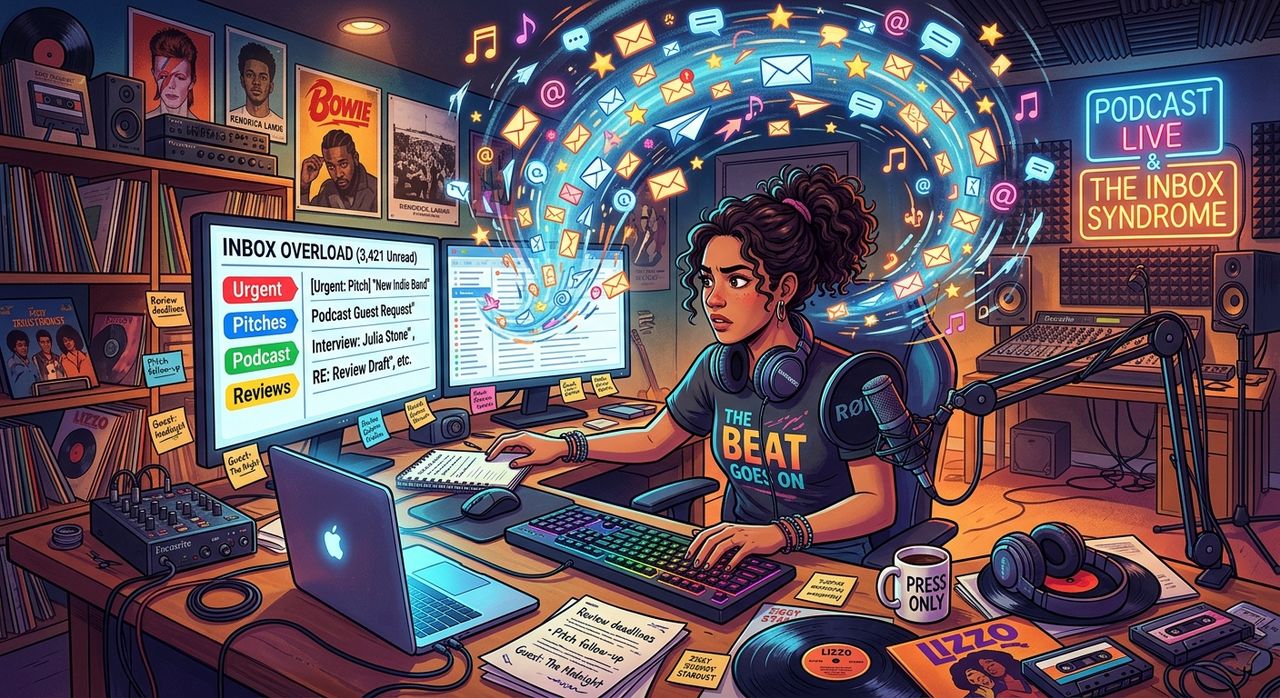
If you cover music for a living, your inbox is basically a second job. PR pitches land before you've had coffee. Interview requests stack up while you're editing audio. Press kit emails arrive on Friday afternoons with a Monday embargo. And somewhere buried in all of that is the one message you actually needed to see. For music journalists, podcast producers, and music bloggers, email volume is not an abstract inconvenience. It is a real, daily obstacle that eats into the time you should be spending on actual creative work.
Inbox Reality Check:
1. Music journalists and podcast producers receive a steady stream of PR pitches, press kit emails, and interview requests that can easily reach dozens per day.
2. Sorting and labeling incoming email by type or urgency, using an AI Gmail assistant, dramatically cuts the time spent deciding what to act on first.
3. Responding to publicists and artists consistently becomes far less draining when you use AI reply drafts to generate a solid first draft in your own voice.
Why Music Coverage Creates a Unique Email Problem
Most people who complain about inbox overload are dealing with internal workplace threads or subscription newsletters. Music journalists face something different. The email comes from all directions: publicists at major labels, indie artists pitching themselves directly, booking agents, festival PR teams, podcast guests requesting rescheduling, and streaming platforms inviting coverage.
Music journalism has always existed at the intersection of passion and grind, but the digital era layered on a communication volume that print-era writers never had to absorb. When every artist has a publicist (or no publicist and is doing it themselves), and every album cycle generates its own wave of outreach, the inbox becomes a kind of permanent noise machine.
The problem compounds over time. Miss a few days and the backlog feels insurmountable. Respond too slowly and you lose the story. Respond without reading carefully and you accidentally accept an interview you meant to decline.
The Pitch Volume Is Not Slowing Down
Here is what a typical week looks like for a working music journalist or podcast host with any kind of audience:
- Unsolicited album pitches from publicists you have never spoken to
- Follow-up emails from those same publicists, usually arriving three days later with "just checking in"
- Interview requests from artists or their management, sometimes with very short turnaround times
- Press kit attachments (often large files) that clog your storage and take time to assess
- Event invitations, listening session RSVPs, and festival accreditation requests
- Reader or listener emails asking for coverage recommendations or pitching their own projects
None of these are inherently bad. Many of them represent real opportunities. But they all demand some form of triage before you can act on them, and that triage takes time.
Triage First, Everything Else Second
The first shift that changes things for most music journalists is treating inbox triage as a distinct task, separate from reading and replying. Before you can respond to anything, you need a clear picture of what is in there and what it is asking of you.
This is where smart tooling starts to matter. Using an AI Gmail assistant to automatically label incoming messages by type, such as pitches versus interview requests versus logistics versus listener mail, gives you a categorized inbox without manual sorting. You open Gmail and instead of an undifferentiated wall of unread messages, you see structured queues. PR pitches in one label. Interview requests in another. Time-sensitive items flagged at the top.
The time saving here is not dramatic on any individual message. But across dozens of emails per week, the cumulative gain is real. You stop making micro-decisions about where to look next. You stop accidentally opening a low-priority pitch when you meant to find an urgent reply.
For podcast producers specifically, this kind of labeling is useful because the incoming mail has very different urgency levels. A guest confirming a recording date needs to be seen today. An album pitch from a band you have never heard of can wait until Friday's dedicated triage session.
Responding Without Burning Out
Triage gets you to the right messages. But you still have to reply to them, and this is where most music journalists lose the most time.
The challenge is not just volume. It is voice consistency. When you are writing back to a publicist, you want to sound like yourself. You want your replies to reflect your actual editorial sensibility, not a robotic template. But writing a fresh, personalized response to every single pitch is unsustainable. And copying a generic reply feels dismissive and eventually affects your professional relationships.
The middle path is using AI reply drafts as a starting point. You feed in context about the pitch or request, and the tool generates a draft that you can refine in a few seconds rather than writing from scratch in a few minutes. The draft captures the gist of what you want to say. You adjust the tone, add anything specific to that artist or publicist, and send.
This approach works especially well for the replies you send most often:
- Politely declining a pitch that is not the right fit for your format
- Acknowledging receipt of a press kit and setting expectations on timing
- Confirming an interview and sending the logistics details
- Following up on something you mentioned in a previous exchange
Each of these has a structure that repeats. AI drafting handles the structure. You handle the personality and the specifics. The result is a reply that sounds like you wrote it, because you did. You just did not start from a blank page.
Building a Rhythm That Actually Works
The journalists and podcast hosts who handle inbox overload best are not the ones with the fastest typing speed. They are the ones who have built a repeatable system and protected time for it.
A common approach that works well for music coverage:
Set aside two fixed triage windows each day. Morning, before any creative work, to catch overnight arrivals. Late afternoon, to clear anything that came in during the day. Outside those windows, the inbox stays closed.
Use labels aggressively. Anything that is not time-sensitive gets labeled and archived rather than left in the main inbox. The main inbox becomes a short list of things that need action today.
Batch your replies in a single session. Rather than context-switching between writing, listening, and replying all day, dedicate one chunk of time to clearing your reply queue. AI drafting makes this session faster, which means you can keep the batch short without letting things pile up.
The Relationship Angle Nobody Talks About
There is a subtler benefit to handling your inbox well that does not get discussed enough. Publicists notice response patterns. Artists remember whether you followed up. Your reputation as a journalist or podcast host is shaped partly by how reliably you communicate, not just by the quality of your coverage.
When your replies are consistent, professional, and arrive within a reasonable timeframe, you become someone publicists trust with embargoed material. You become someone artists feel comfortable pitching directly. That access compounds over time. A well-managed inbox is, in a strange way, a long-term editorial asset.
Research on email overload confirms what most journalists already feel intuitively: the cognitive cost of a disorganized inbox extends beyond the inbox itself. It creates a background hum of anxiety that affects concentration and decision-making in unrelated tasks. Getting that cost under control is not just about efficiency. It is about protecting your headspace for the work that actually matters.
Your Inbox, Your Editorial Rhythm
Music journalism and podcasting are not jobs you do from 9 to 5. The work bleeds into evenings, weekends, and early mornings. That makes it even more important to draw a line between productive communication and compulsive inbox checking.
The tools exist now to make your inbox work for you instead of against you. Automated triage gets you to the right messages faster. AI drafting gets you out of your reply queue without losing your voice. And a fixed rhythm keeps the whole system from collapsing the moment things get busy.
Your coverage, your interviews, your podcast episodes deserve your full attention. The inbox is supposed to support that work. With the right setup, it finally can.