Home>Production & Technology>Orchestra and Chamber Music Instruments Guide
Production & Technology
Orchestra and Chamber Music Instruments Guide
Modified: 3 October 2026
Table of Contents
- First, understand the big picture of orchestra instruments
- How orchestras and chamber groups are put together
- The conductor, tuning, and behind-the-scenes details
- Percussion fundamentals and how the instruments work
- Orchestral percussion and specific drum types
- Learning and playing instruments at different levels
- Specialized topics and unusual questions
First, understand the big picture of orchestra instruments
This orchestra instruments guide starts with a simple idea: before you get lost in instrument names, step back and think about scale. An orchestra is a large group of musicians blending strings, woodwinds, brass, and percussion into a layered, powerful sound. The orchestra's importance comes from how those sections work together: strings carry the melody, brass add power, woodwinds provide color, and percussion drives the rhythm. That blend is what makes a full symphonic work feel vast. This is also where you see how a wind ensemble differs from an orchestra. A wind ensemble is built from wind, brass, and percussion instruments, generally leaving out the string section entirely. That omission shifts the texture from soaring string lines to a concentrated focus on brass and reed colors.
In the Romantic period, that orchestral palette grew even wider. The flute section added the piccolo, extending the woodwind family’s range and letting composers paint with brighter, higher sounds. The battery of rhythm instruments grew more adventurous too, moving beyond timpani to include chimes, gongs, cymbals, and whistles for dramatic punctuation. Once you grasp these structural differences, you can make sense of the most common questions people ask when sizing up a group. The size of a full orchestra depends on the repertoire. The seating is organized to reflect musical function. Instruments joined the collective over time. The group settles on a single pitch before the downbeat.
That placement is no accident. It reflects how the woodwinds bridge the lyrical strings and the powerful brass, blending the two worlds. The flute’s voice can float above a full texture or double a violin line, so putting it in the middle of the action makes acoustic sense. Think of the seating chart as a map of musical function rather than a random arrangement. The strings fan out across the front because they form the core of the sound. Woodwinds sit centrally behind them. Brass and the battery of struck and shaken instruments anchor the back rows, where their volume can project without overpowering the more delicate voices.
Understanding the layout also helps you appreciate the expanded Romantic orchestra. Composers like Berlioz and Mahler kept adding stations to the back of the stage. They wanted more thunder from the timpani, more shimmer from the cymbals, and more mystery from the gongs. The back row became a playground of tuned and untuned sound-makers. That expansion was not just about volume. It was about expanding the emotional vocabulary of the group. A single stroke on a tam-tam could change the entire mood of a symphony. A celesta could make the texture sparkle. These choices were deliberate, and they reshaped what a large instrumental body could express. For anyone curious about the orchestra's importance, the article on why orchestra is important shows how these innovations gave the ensemble its unmatched emotional depth.
The question of the size of a full orchestra depends on the repertoire. A Mozart symphony might need fewer than forty players. A Mahler symphony can demand over a hundred. That range is why seating plans are flexible. The string count swells first when the group grows. You might see sixteen first violins for a Romantic blockbuster but only eight for a Classical work. The wind and brass sections double or triple depending on the score. The back row of struck and shaken instruments expands from one player covering multiple parts to a whole team of specialists. Knowing the expected size for each period helps you read a stage at a glance.
Before any of this can happen, the group must find a common pitch. The oboe sounds a clear A, and everyone tunes to it. That ritual makes the oboe the instrument that tunes an orchestra. Its penetrating, stable tone cuts through the noise of a hundred musicians warming up. The oboe’s pitch is less affected by temperature and humidity than a string’s, so it holds steady. Once that A rings out, the woodwinds adjust their reeds, the brass tweak their tuning slides, and the strings tighten or loosen their pegs. The concertmaster then takes the A from the oboe and passes it through the string section. This quiet moment of calibration is what lets the different sections of the orchestra lock together. Without it, the strings would drift sharp, the brass would sag flat, and the whole sound would blur. This tuning ritual is a perfect example of the orchestra's importance, which the article on why orchestra is important details by showing how such precise cooperation creates a unified artistic voice.
The back row of struck and shaken instruments is often the most misunderstood part of the group. People picture a drummer bashing away, but the reality is far more precise. The percussion instruments in an orchestra demand the same control as a violin or a flute. A timpanist must tune the drums to specific notes and change those pitches mid-piece with foot pedals. A cymbal player must judge exactly how hard to strike and how quickly to dampen the metal. A bass drum stroke must land with the perfect weight to support a climax without burying the brass. The mallet instruments like xylophone and glockenspiel require keyboard technique. The auxiliary sound-makers like triangle, tambourine, and castanets demand razor-sharp timing. A single misplaced triangle note can ruin a delicate passage.
These sections did not arrive all at once. The early Classical orchestra was a lean operation of strings, pairs of oboes or flutes, horns, trumpets, and timpani. The woodwind section grew richer as clarinets joined and bassoons multiplied. The brass section gained trombones and a tuba. The back row of struck and shaken instruments exploded during the Romantic period and kept evolving through the twentieth century. Modern composers treat that back row as a full department with its own subsections: tuned mallet instruments, metal shimmers like triangle and cymbals, wooden clicks and blocks, and a vast array of drums. Each subsection requires a different technique. A player who excels on marimba might never touch a snare drum. The days of one person covering everything are long gone.
That brings us back to the distinction between a symphony orchestra and a wind ensemble. A wind ensemble focuses the spotlight on the brass and reed colors that an orchestra spreads across four families. Without violins and cellos, the clarinets and saxophones take on the melodic role. The brass section carries even more weight. The battery of struck and shaken instruments often plays a more prominent, exposed part. The result is a sound that is brilliant, direct, and full of edge. Where an orchestra blends, a wind ensemble contrasts. Both formats offer a complete musical world. The one you prefer depends on whether you are drawn to the orchestra's importance as a unified, layered whole or to the concentrated power of winds and percussion alone. Either way, the article on why orchestra is important will deepen your appreciation for how this ensemble transforms a collection of instruments into something far greater than the sum of its parts.
- a wind ensemble differ from an orchestra — How Does A Wind Ensemble Differ From An Orchestra?
- orchestra's importance — Why Orchestra Is Important
How orchestras and chamber groups are put together
A full symphony orchestra is usually built from four families: strings, woodwinds, brass, and percussion. The string section is centered on violin, viola, cello, and double bass, while harp or keyboard instruments are sometimes added separately. When you look at typical orchestra instrument counts, the group often numbers around 100 players, though the exact breakdown varies by the work being performed, venue, and orchestra size. A group of roughly 40 players or fewer is commonly called a chamber orchestra. That smaller scale points toward a fundamentally different experience, because chamber music is defined by assigning one player per part, which turns every line into an exposed, conversational voice. Any combination of classical music instruments can qualify under chamber music instrumentation as long as the group stays small enough to maintain that single-player-per-part texture. Before you buy tickets, it helps to know that the best seats for an orchestra concert are typically found directly in the center of the hall, horizontally, and about one third of the way back from the stage, where the blend of sections reaches your ears most naturally.
The conductor, tuning, and behind-the-scenes details
Before a single note sounds, the performance relies on a set of quiet, practical mechanics that begin with the person on the podium. The device does a conductor use to lead an orchestra is a baton, a slender tapered stick that sharpens the beat and makes gestures legible to players in the back rows, though you will also see conductors who set it aside and shape phrases with their hands alone. That visual clarity becomes the group’s shared clock, but it only works if everyone first agrees on a reference pitch, so the oboe steps forward to sound an A and the group tunes to that clear, penetrating tone in a ritual that bridges the silent preparation and the downbeat. Once the music is underway, capturing that blend for a recording or reinforcement adds another layer of planning. When engineers mic an orchestra, the approach demands an array of microphones positioned to balance the room's natural resonance with the detail of each section, a process that varies enormously with the hall and the repertoire. These behind-the-scenes elements are what transform a hall full of individual players into a unified instrument ready to deliver the intimate conversations and powerful climaxes that define the two listening experiences at the heart of chamber music and symphonic works.
Percussion fundamentals and how the instruments work
At its core, the physics of percussion instruments make sound when a struck body vibrates, and the vibrating membrane, bar, plate, or shell radiates energy as sound while the note fades as that energy dissipates. This physical principle unites everything from a concert bass drum to a tiny triangle. It shapes how the purpose of percussion instruments in music plays out in real time: providing rhythm, accent, color, and in some cases definite pitch. In a full orchestra, that role often means punctuating climaxes and driving rhythmic momentum. In a chamber setting a single player might use a handful of instruments to add splashes of color without overwhelming the exposed, conversational texture of one-player-per-part writing. When you hear a timpanist adjust pedals mid-phrase or a snare drummer produce crisp, high crack, you are hearing how drums make different pitches mainly by changing the tension of the head and the drum’s size and construction. Tightening the head raises the vibration frequency and loosening it lowers it. Drum size also affects the resonant pitch range. This tuning flexibility is why most drums are not fixed-pitch instruments, but their pitch can still be adjusted by tuning the head. If you want to explore these principles hands-on, you can make easy percussion instruments from simple striking or shaking objects, turning household items into shakers, scrapers, or tapped surfaces that follow the same acoustic rules as their orchestral cousins.
Orchestral percussion and specific drum types
When you look across the back of the stage, the percussion instruments would you usually find in a symphony orchestra fall into two rough families. Some produce definite pitch, like timpani, glockenspiel, xylophone, celesta, and chimes or tubular bells. Others provide unpitched color and accent, including snare drum, bass drum, cymbals, triangle, tam-tam or gong, and tambourine. The big drums called timpani, also known as kettle drums, sit right at the center of that pitched group. A player can quietly change their tuning mid-phrase by working foot pedals that tighten or loosen the head. That mechanism turns them into one of the few drums that can genuinely carry a melody rather than just marking a rhythm. Outside the orchestra hall, the family tree broadens dramatically when you encounter African drum varieties, which are not counted in a single fixed number. These include many distinct designs such as djembe, dundun, bata, bougarabou, ngoma, and ashiko, each tied to specific cultural traditions and construction methods. In a chamber context, a single player might draw on just one or two of these orchestral instruments. A flash of accent never overwhelms the exposed, conversational texture of one-player-per-part writing.
Learning and playing instruments at different levels
Starting a musical journey often begins with the choices presented in a school music program, and understanding the orchestra instruments available in middle school gives you a practical starting point. Most programs introduce the string family first, offering violin, viola, cello, and bass as the core options that form the foundation of the group. From there, many students look for a smooth transition into the wind section, and the modern woodwind replacement for the recorder is the flute, which takes the breath control you may have learned on that simple instrument and applies it to a shining, expressive voice made of metal. As you progress, you will see exactly where flutes are played in an orchestra, seated in the woodwind section directly behind the strings and right in front of the conductor, a placement that puts their clear tone at the heart of the blend. While every instrument demands dedication, many beginners ask about the easiest orchestra instrument to learn, though the answer truly depends on your physical comfort and the sound that excites you most, since a natural affinity for an instrument’s feel always makes the early stages more rewarding. That personal connection matters even more when you consider the setting you are aiming for, because the exposed, single-voice responsibility of a chamber group requires a different kind of confidence than the powerful, blended support of a full string section.
Specialized topics and unusual questions
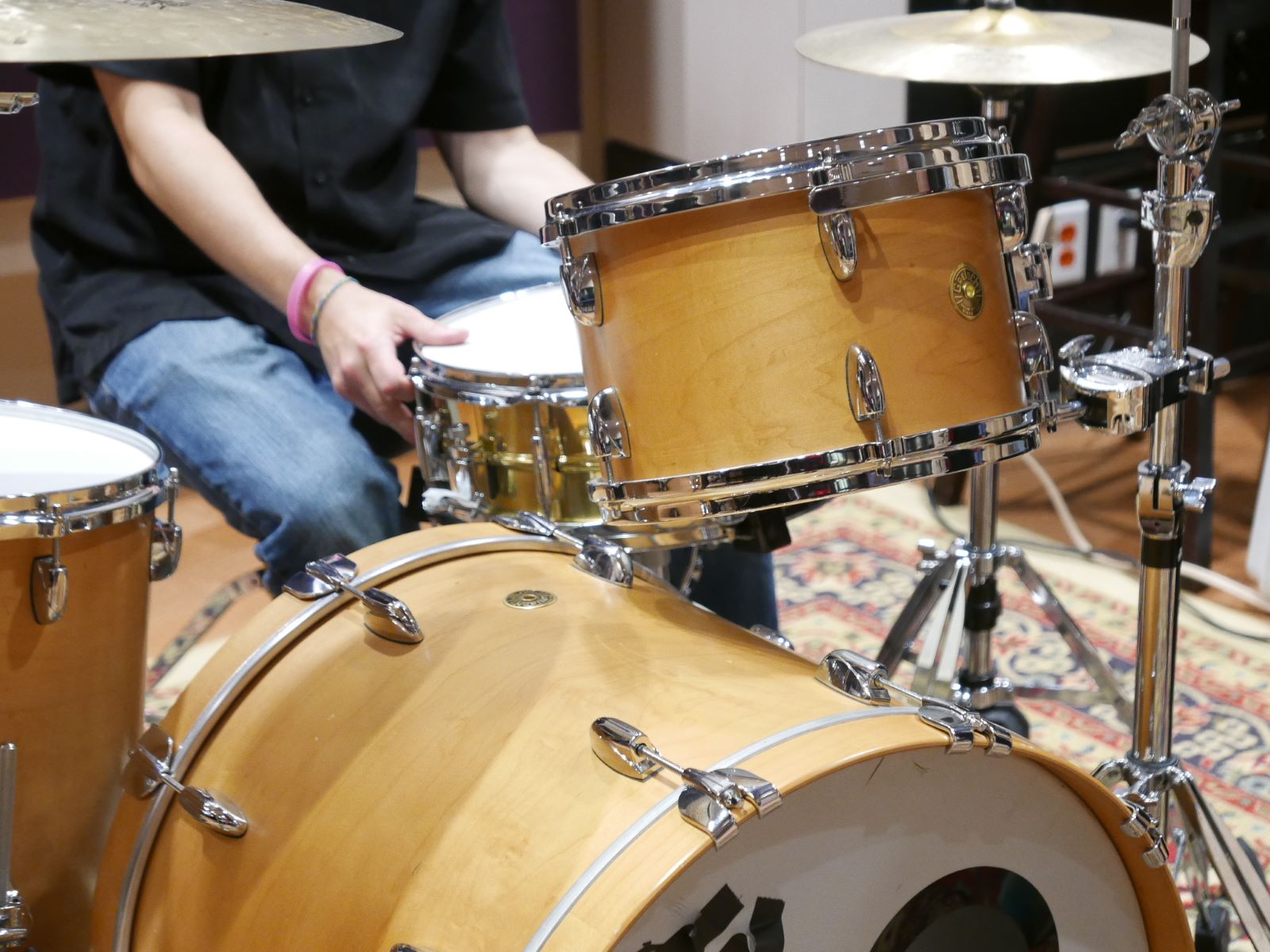
Moving from the concert hall into more specialized territory reveals how percussionists shape their sound in unexpected ways. In the recording studio or on a cramped stage, you will often see drummers using tape on drums to dampen unwanted overtones and control sustain, pressing strips of gaffer tape directly onto the batter head to dry out the ring without choking the fundamental attack. That same pursuit of a precise, aggressive voice drives the sheer physical scale of Slipknot's drum setup, which is built to withstand a punishing, high-velocity performance. Stepping outside, the percussion instruments in a marching band prioritize projection and mobility, swapping a concert bass drum for a harness-mounted version while the battery adds high-tension snares, multi-tenor quads, and brilliant crash cymbals that cut through the open air of a football field. For a complete shift in scale and texture, the best us chamber music festivals offer an intimate setting where a single percussionist might trade that massive kit for a lone marimba or a carefully selected triangle, serving the intimate dialogue that defines the repertoire. In a completely different corner of sound design, an orchestra hit is a synthesized blast layering dozens of instruments into a single percussive stab.