Home>Devices & Equipment>Radio Broadcasting Careers and Stations
Devices & Equipment
Radio Broadcasting Careers and Stations
Modified: 3 October 2026
Table of Contents
What radio station careers really involve
Before you commit to specific radio station careers or an ownership model, you need to understand that a radio broadcast is fundamentally the transmission of sound as a signal to receivers over the air, not a one-to-one digital stream. The business side of broadcast radio is built on measuring audiences, and because radio stations knowing their listener count is essential for selling advertising, the industry relies on aggregate estimates rather than a live headcount of every person tuned in. Those radio listenership numbers are collected through tools like weekly listening diaries, telephone recall studies, or passive meters that track exposure, with respondents typically recording a station if they listened for at least five consecutive minutes within a quarter-hour segment. This system defines what you are actually building, whether you are programming the main types of radio shows, which are shaped more by a station’s chosen format than by a fixed taxonomy, or analyzing reach and time spent listening across an average week.
Owning a station
Owning a station is a capital-intensive real estate and regulatory play, not a creative side project. Before you picture yourself on air, you need to confront the cost of a radio station, which begins with spectrum scarcity rather than equipment. The physical transmitter and studio are the easy part, because the real asset is the license itself, and the FCC says a license is required to operate a radio station in the AM or FM band. When you set out to start a radio station fm, you are not simply buying gear but filing a petition for rulemaking through the Office of the Secretary on the same day you file FCC Form 301 for a specific allotment, which assumes you are building a business with a signal footprint, not a personal brand with a playlist.
Many people who want to start a radio station mistakenly assume low-power FM is a casual entry point, yet even noncommercial educational licenses require a formal application and the payment of the rulemaking fee and the application filing fee. The dream to have your own radio station often collides with the reality that the Audio Division licenses commercial and noncommercial educational AM, FM, FM Translator, FM Booster, and noncommercial educational Low Power FM services, and you cannot simply claim an open frequency. Ignoring this structure by operating a pirate radio station carries substantial legal risk, because the FCC defines this as operating an over-the-air station in the AM or FM band without an FCC license, beyond the unlicensed radiated emission limits in Part 15. If a neighbor reports an unlicensed broadcast between 87.7 and 108 megahertz, you are facing enforcement action, not a romantic outlaw rebranding.
Building your on-air career
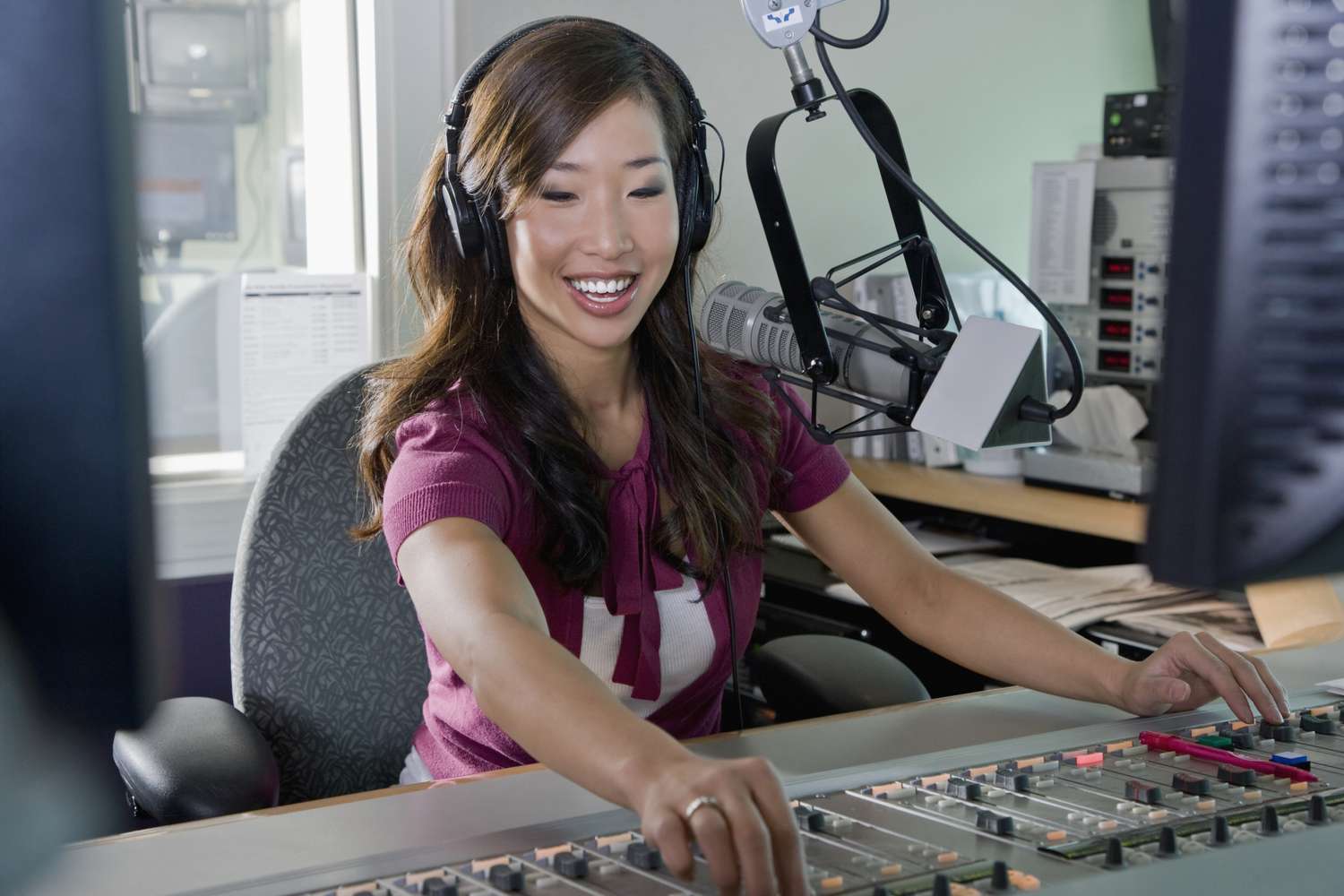
Walking into a station with a communications or journalism degree is the most common path if you want to become a radio host, though the real audition starts long before your first paycheck. The U.S. Bureau of Labor Statistics notes that a bachelor’s degree is typical. Internships or work at a school station give you the tape you need to get hired. What surprises most newcomers is that being on air is only a slice of the shift. You are also presenting weather, traffic, and news. You will interview guests. For those who want to be a radio DJ, you act as a master of ceremonies while programming recorded music between those segments. The earnings of a radio host reflect that split between performance and production. If your focus leans entirely toward mixing and curating tracks, the earnings of radio DJs outside the broadcast news environment sit slightly lower. Behind the voice, the person screening calls, stacking audio, and running the board shapes every minute you hear. The typical earnings of radio producers align with the broader producers and directors category. Building a loyal audience means creating content that feels spontaneous while executing a tightly timed log. No single educational credential guarantees you a seat in front of the microphone.
Creating your own show
Before you commit to a full station build-out, creating your own program lets you separate the creative work from the regulatory and capital demands of owning a license. The first practical step to start a radio show is shaping a format that fits a specific time block rather than an entire broadcast day, helping you test your concept with minimal risk. You can run a pilot straight from a browser using a standard laptop microphone and free playout software. Once you have a clock and a theme, you need to write a radio script that times every segment to the second, ensuring you maintain control over pacing and content, a skill you'll master with our guide on how to craft compelling dialogue and transitions. Include the live reads, music beds, and back-announces that keep you from drifting into dead air. Playing a personal streaming playlist over the air creates immediate licensing exposure. As the show takes shape, you should calculate the pricing of radio advertisements against your actual listenership. This tells you whether the program can cover its own costs before you scale. Building a single hosted hour lets you refine your voice and workflow without confusing a personal project with a capital-intensive station purchase.
- write a radio script — How To Write A Radio Script
- start a radio show — How To Start A Radio Show
- get music on radio — How To Get Music On Radio
Who's who in radio
Listeners often ask about specific stations and personalities they hear in the car or on a smart speaker, and the answers reveal how differently a national network is built compared to a single local signal. If you are trying to locate the klove radio station located near you, the network’s own site provides a station finder; the network began as a single signal in Santa Rosa, California, and its general correspondence address is in Franklin, Tennessee. By contrast, finding NPR's radio station frequency means tuning into a member station that licenses programming from National Public Radio, an organization headquartered in Washington, D.C. with NPR West in Culver City, California. The distinction between a network-owned signal and an affiliate matters when you are trying to understand why a show appears on different dial positions in different cities.
Questions about personalities like Dan Bongino's radio station or the tom joyner radio station point toward syndication models where the host records from one location while the program airs on stations owned by other companies. The same structural question comes up when people investigate ownership of the Breakfast Club radio show, since a nationally recognized morning program can be produced by one entity and carried by separately owned affiliates. For someone trying to track down the live radio show 'Who Radio Live', the search itself highlights how digital streaming has made the concept of a single home station less relevant than the distribution platform.
What happened to...
When a familiar voice disappears from the dial, listeners often start searching for the fate of Rob from Rad Radio, and what surfaced was not a permanent exit but an on-air acknowledgment of personal struggles in 2023, with the host stating he was “not going anywhere” and his show pages remaining active on the brand’s site. That kind of absence feels different from a station-wide reset, which is what prompted questions about the recent WGN Radio format shakeup after a long run of schedule updates and a major historical frequency move to 720 kHz. The station continues to carry live sports under a multi-year rights extension and still lists the Hamp & O’B Show on its current schedule. For anyone watching these shifts while trying to build their own career, the pattern is consistent: talent can step back without severing ties, and legacy stations evolve their lineups while holding onto core assets like play-by-play contracts.
Events and venues
Attending an industry event gives you a much clearer picture of who actually pays for the production, and the venues themselves tell you how the economics scale.
If you are trying to understand the IHeart Radio awards channel, the 2026 ceremony aired live on FOX and streamed through the iHeartRadio app, a distribution model far removed from a single-station broadcast.
Seeing that layout makes it obvious why a personal brand needs a completely different budget than a station acquisition. The scale becomes physical when you check the Radio City Music Hall size; with a seated capacity of 5,960 and an auditorium that is 84 feet high, a live broadcast from a room that deep requires a technical crew and infrastructure that a self-funded internet show does not touch.
While the Radio Disney Music Awards timing is not currently confirmed through official channels, the very nature of a televised award show aimed at a youth audience demands a sponsor-integrated production cycle that runs on network calendars, not on an independent creator's release schedule.
Walking through a venue like the Dolby Theatre reinforces the gap between performing on a rented stage and owning the signal that carries the performance.
Quirky radio questions
When your infotainment screen freezes, the impulse to look up how to reset VW radio collides immediately with the reality that Volkswagen’s official support pages do not publish a documented reset procedure, menu path, or button combination. That same gap between a simple search and a documented answer shows up when you try to identify singers on the radio using Shazam, which Apple confirms can name a song playing on TV or radio, in a restaurant or gym, or in another app and then let you save it, view lyrics, or discover concerts. Neither tool requires you to understand station ownership, but both illustrate how a piece of software and a piece of hardware sit on opposite sides of a business you never have to touch. If you decide you want to work at a radio station, the available roles scatter across completely unrelated buildings: an account executive reports to a sales manager, a board operator takes direction from a program director, and a chief engineer answers to a general manager. Yet every one of those jobs exists inside a company whose signal you can identify with a free app and whose dashboard you reset without ever knowing the call letters.