Home>Devices & Equipment>Microphone Types and Their Uses
Devices & Equipment
Microphone Types and Their Uses
Modified: 3 October 2026
Table of Contents
Understand microphone types and how they work
Understanding microphone types is essential before you choose any gear, because every microphone translates sound into an electrical signal, but the way it performs that conversion and the directions from which it listens define where it will succeed or fail. Before anything else, you need to grasp that polar pattern is the single most critical factor for capturing clear audio in any environment. This invisible geometry determines which directions the mic hears and which it ignores. Picking the wrong one will cause more problems than any budget upgrade can fix. A directional pattern, by contrast, focuses on sound from one area while rejecting off-axis noise. This is why it dominates on stage and on set.
Physical design and the transducer type inside the body shape a mic’s sensitivity, frequency response, and how it handles loud sources. Large-diaphragm models flatter voices with a rich low end, while small-diaphragm designs capture fast transients with surgical accuracy. How you control the signal in the moment matters too. On an iPhone during a call or recording, you can open Control Center, tap the app's controls, and under Audio & Video choose a Mic Mode like Voice Isolation to suppress background sound. On a Samsung Galaxy phone, a two-finger swipe down from the top of the screen lets you tap Mic mode, where Full spectrum captures voice and all the ambience around you. The core building blocks of your recording chain come down to a handful of distinct transducer and form-factor categories. Knowing which type to reach for means matching its strengths to your source, your space, and how much isolation you really need.
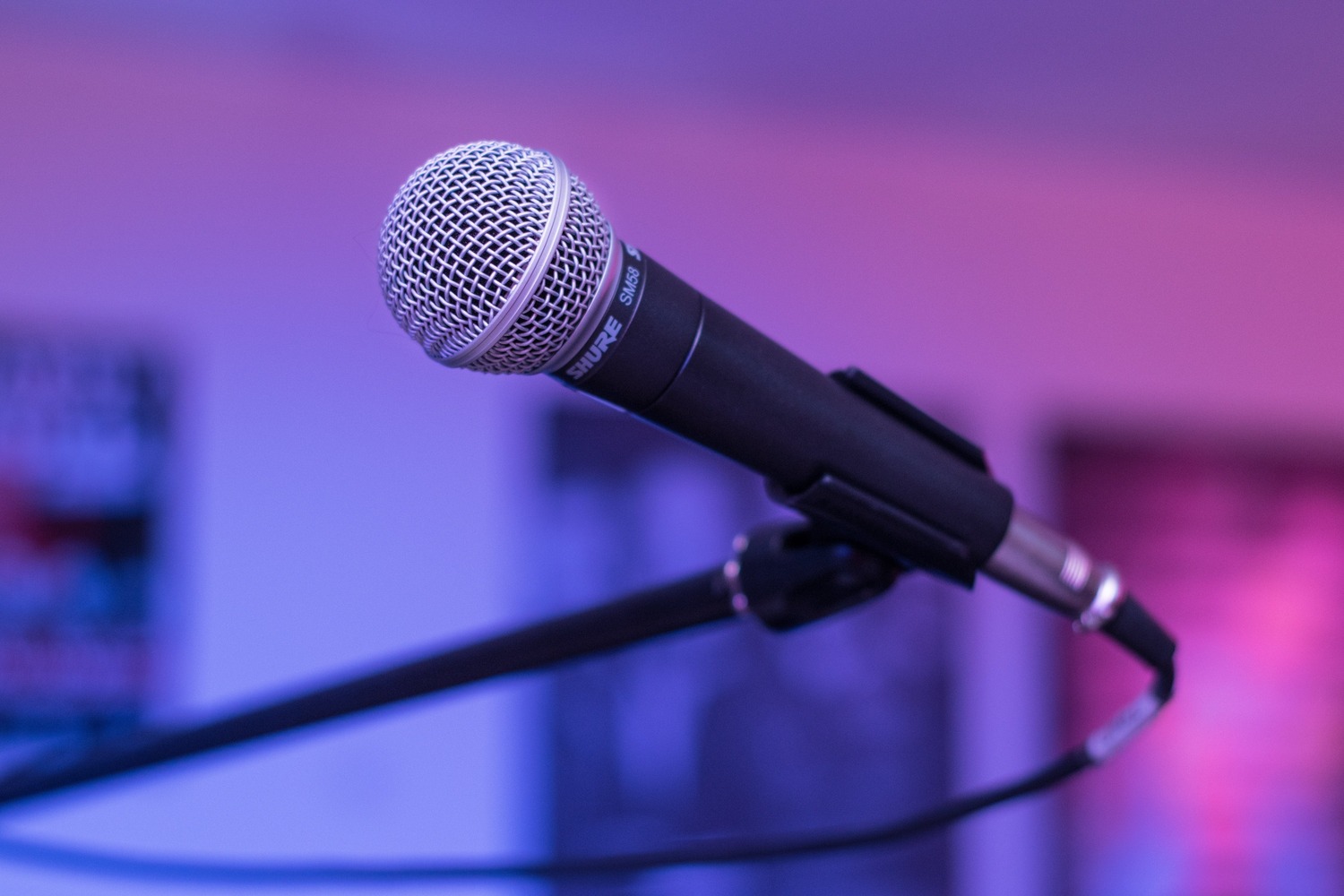
The rugged workhorse of the audio world is a dynamic microphone. It uses a moving coil attached to a diaphragm suspended in a magnetic field to generate current purely through physical motion. This simple electromagnetic process makes it incredibly durable and capable of handling extremely high sound pressure levels without distorting. You can drop it, sweat on it, and place it in front of a screaming guitar cabinet without fear. Its naturally tailored frequency response often rolls off the highest highs and the lowest lows, which actually helps it reject handling noise and stage rumble. The trade-off is lower sensitivity, meaning it requires a lot of clean gain from your preamp to reach a usable level on quiet sources.
At the opposite end of the sensitivity spectrum sits a condenser microphone. Instead of a moving coil, it uses an electrically charged diaphragm and a backplate that form a capacitor. Sound waves move the diaphragm and change the capacitance, which requires external power, usually 48-volt phantom power, to operate the internal electronics. This design captures high-frequency detail and subtle transient response with a realism that dynamic mics simply cannot match. The ultra-thin diaphragm can start and stop almost instantly, making it the standard choice for capturing the breathy intimacy of a vocal or the shimmer of an acoustic guitar. The downside is that it is more fragile and sensitive to humidity, and it can overload if placed too close to a very loud source.
Within the condenser family, a large diaphragm condenser microphone holds a special place for studio vocals. The physically larger capsule moves more air and often adds a pleasing harmonic coloration that makes voices sound larger than life. This flattering character comes from a slight emphasis in the low end and a smooth top-end presence boost that helps a vocal cut through a dense mix. You will see it positioned behind a pop filter in almost every professional studio because it captures the full weight and nuance of a performance. Small-diaphragm condensers, by contrast, are prized for their ruler-flat accuracy and are often found as pencil-shaped instrument mics on hi-hats, acoustic instruments, and drum overheads.
Polar pattern is not just a spec on a box. It is the difference between useable audio and a ruined take. A unidirectional microphone is a broad term for any mic that picks up sound primarily from one direction, and it is the first line of defense against unwanted room reflections. By rejecting sound from the rear, it allows you to isolate a voice from a computer fan or an instrument from stage bleed. This category contains a whole family of more specific patterns, each with a different angle of rejection. Understanding these shapes lets you aim the sweet spot precisely where you want it and point the null point directly at the noise source you need to kill.
When you need extreme focus, you reach for a directional microphone with a tight pickup angle. These designs aggressively reject off-axis sound, making them essential tools in noisy environments where you cannot control the background. A shotgun mic, for example, uses an interference tube to create a laser-like focus straight ahead while heavily attenuating sound from the sides. This makes it the standard choice for film dialogue where the microphone must stay out of the frame but still capture a whisper from several feet away. The trade-off is that you must aim it precisely because a slight turn of the head can move the speaker out of the sweet spot and into a zone of thin, hollow sound.
Even more focused is a super cardioid microphone. It has a narrower front pickup angle than a standard cardioid and a small lobe of sensitivity directly at the rear. This rear lobe means you must place stage monitors carefully, positioning them slightly off to the side rather than straight behind the mic. The payoff is maximum gain before feedback and the highest possible isolation from nearby instruments on a loud stage. This pattern is the secret weapon for lead vocalists in rock bands and for drummers who need to isolate a snare drum from the crashing cymbals just inches away.
Polar patterns also dictate how a microphone interacts with the physical space around it. An omnidirectional pattern does not exhibit proximity effect, meaning the bass does not boost when you move closer, which makes it sound very natural even when the speaker moves around. A directional pattern, however, will dramatically boost the low end when you work it up close. Broadcasters and podcasters exploit this proximity effect intentionally, getting right on the grille to make their voice sound deep, authoritative, and intimate. This physical bass boost is a free mixing tool that no EQ plugin can quite replicate because it happens at the acoustic level before the signal is even converted.
Protecting your capsule from moving air is essential and that is exactly what a windscreen do for a microphone. It acts as a physical barrier that breaks up gusts of wind and plosive blasts before they slam into the diaphragm. Without one, the sudden pressure wave from a "P" or "B" sound creates a low-frequency th
- a calibration microphone — What Is A Calibration Microphone
- a lavalier microphone — What Is A Lavalier Microphone
- omnidirectional microphone — What Is Omnidirectional Microphone
Specialized microphones for specific tasks
Some recording challenges demand a microphone built for a single purpose rather than a generalist workhorse. When you need to capture a natural sense of space, a stereo microphone uses two capsules in a fixed arrangement to preserve the left-right image, making a live room or an acoustic ensemble feel real in playback. On an iPhone, you can engage a stereo microphone directly in the Camera settings by opening the Settings app, tapping Camera, tapping Record Sound, and choosing Stereo. For dialogue on a film set or a video shoot, a boom microphone mounted overhead lets you aim a tight directional pattern at the talent while staying out of the frame, isolating speech from the surroundings without clipping a body pack into the costume. In situations where the microphone must be invisible and the speaker needs both hands free, a lavalier microphone clips to a collar or lapel inches from the mouth and delivers consistent levels as the person turns or moves. Because it lives so close to the source, a lavalier microphone sidesteps much of the room noise that frustrates a fixed camera mic, though it demands careful cable routing to avoid fabric rustle.
Microphone accessories and their purpose
Even before sound reaches the capsule, what you place around a microphone shapes the recording. The most common addition is a pop filter, and understanding what the screen in front of a microphone do comes down to physics. It is a noise shield that diffuses the fast burst of air from plosive sounds like “p” and “b” before that energy can overload the capsule and cause a low-frequency thump or digital clipping. A typical design uses a layer of acoustically semi-transparent material stretched on a circular frame with a clamp and flexible mounting bracket that lets you position it a few inches from the mic body. On a loud stage, a foam windscreen serves a similar purpose by reducing plosives and keeping saliva off the grille, though it may color the sound slightly more than a studio pop filter. Positioning is everything with any of these barriers, and the same is true for the hardware that holds them. No official consumer-support page documents steps for how to make a microphone stand, yet any rumble transferred through the shaft will be far more noticeable than a subtle room reflection. No retrieved official support page documents steps for how to hide a microphone, but you must always route the cable with a gentle loop to stop fabric rustle from sabotaging the take.
Setting up and connecting your microphone
Getting audio into your system starts with matching your physical connection to the gear at hand. The wide range of microphone device types means that process can look completely different depending on whether you are plugging into a phone, an interface, or a radio. On a modern iPhone or Android handset, the microphone itself is recognized as a hardware feature that apps must request permission to access. You manage that on an iPhone by going to Settings > Privacy & Security > Microphone and toggling the app on, while on Android you open Settings > Apps, pick the app, tap Permissions, and choose Allow. When you need to set up a condenser microphone, remember that these mics typically require phantom power from your interface or mixer before you will hear anything. For operators integrating audio into a ham shack, matching the impedance of the microphone for a FTDX101D means working with a nominal 600 ohms, though the radio accepts a usable range from 200 ohms up to 10 k-ohms. Once everything is connected, the familiar ritual of a microphone check, one, two. what is this is simply a quick way to confirm that gain staging is healthy and the signal is hitting your recorder or front-of-house console cleanly before the real take begins.
Shaping and enhancing microphone sound
When a voice sounds thin or distant, the reflex is often to reach for an EQ and apply a low-shelf boost, but the physical factors at play are just as important as any software slider. A common mistake is to bass boost your microphone by cranking the low end on the channel strip before checking how close the talent is to the capsule, since the proximity effect inherent in directional mics can add all the weight you need when you simply move the source within a few inches of the grille.
If you do need to bass boost microphone signals electronically on an Android device, Google’s Sound Amplifier app includes a dedicated control: open the app, tap Phone mic, and drag the low-frequency slider to the left to emphasize deep voices and room-shaking tones. Apple takes a different approach on the iPhone, offering Mic Modes like Voice Isolation, Wide Spectrum, and Automatic in Control Center during a call or recording, but it does not provide a dedicated bass-boost control for the built-in microphone. The physical microphone size also shapes the low-end character before any processing occurs, as a larger diaphragm tends to capture a more extended, natural bottom octave than a tiny electret capsule buried in a phone body.
Choosing microphones for real-world situations
When you face a real recording challenge, the polar pattern you choose makes or breaks the result before any other factor comes into play. A loud restaurant interview demands a tight cardioid to reject the clatter behind the subject, while a roundtable discussion needs an omnidirectional pattern that hears everyone equally. The same principle guides the microphone choices for a choir, where balancing the blend of voices against the room’s natural reverberation shapes the microphone choices for a choir. In situations where you need to isolate a single distant source, you can build a parabolic microphone around a simple dish and a small omni capsule placed at the focal point, and the reflector’s extreme directionality pulls a bird call or a quarterback’s snap out of thin air. The technology to do any of this rests on a surprisingly deep history, stretching back to the invention date of the microphone when Emile Berliner created a working transmitter on March 4, 1877, marking a key point in the invention date of the microphone.