Home>Devices & Equipment>Music Box Repair, Tune Identification and DIY Projects
Devices & Equipment
Music Box Repair, Tune Identification and DIY Projects
Modified: 3 October 2026
Table of Contents
- Music box repair and tune identification
- How music boxes work
- Basic troubleshooting and common fixes
- Repairing specific music box types
- Professional repair, maintenance and valuation
- Dating and operating antique music boxes
- Converting and composing music box tunes
- Diy music box mechanisms and paper strip projects
- Creative music box and instrument builds
Music box repair and tune identification
Before you attempt any music box repair, let the mechanism do the work for you when trying to identify music box tune. Modern phones can listen to the melody just as they would any song. On an iPhone, open Control Center, tap the Add Controls (+) button, tap Add a Control, choose Recognize Music, then tap Recognize Music. On an Android device, open the Google app, tap the Mic, and then tap Search a song. You can even hum, whistle, or sing the melody if the comb is too faint to pick up clearly. If you are using a Pixel, open the Now Playing app and tap Now Playing, or in Quick Settings tap Now Playing, and it may surface the music box song without you lifting a finger. When the tinkling texture itself fascinates you more than the tune, you are probably drawn to the family of music box-like instruments such as the celesta or a plucked idiophone that share that struck-metal attack and pure decay. People sometimes pause and wonder what does it mean to hear a music box playing in your house when no obvious source is present.
How music boxes work
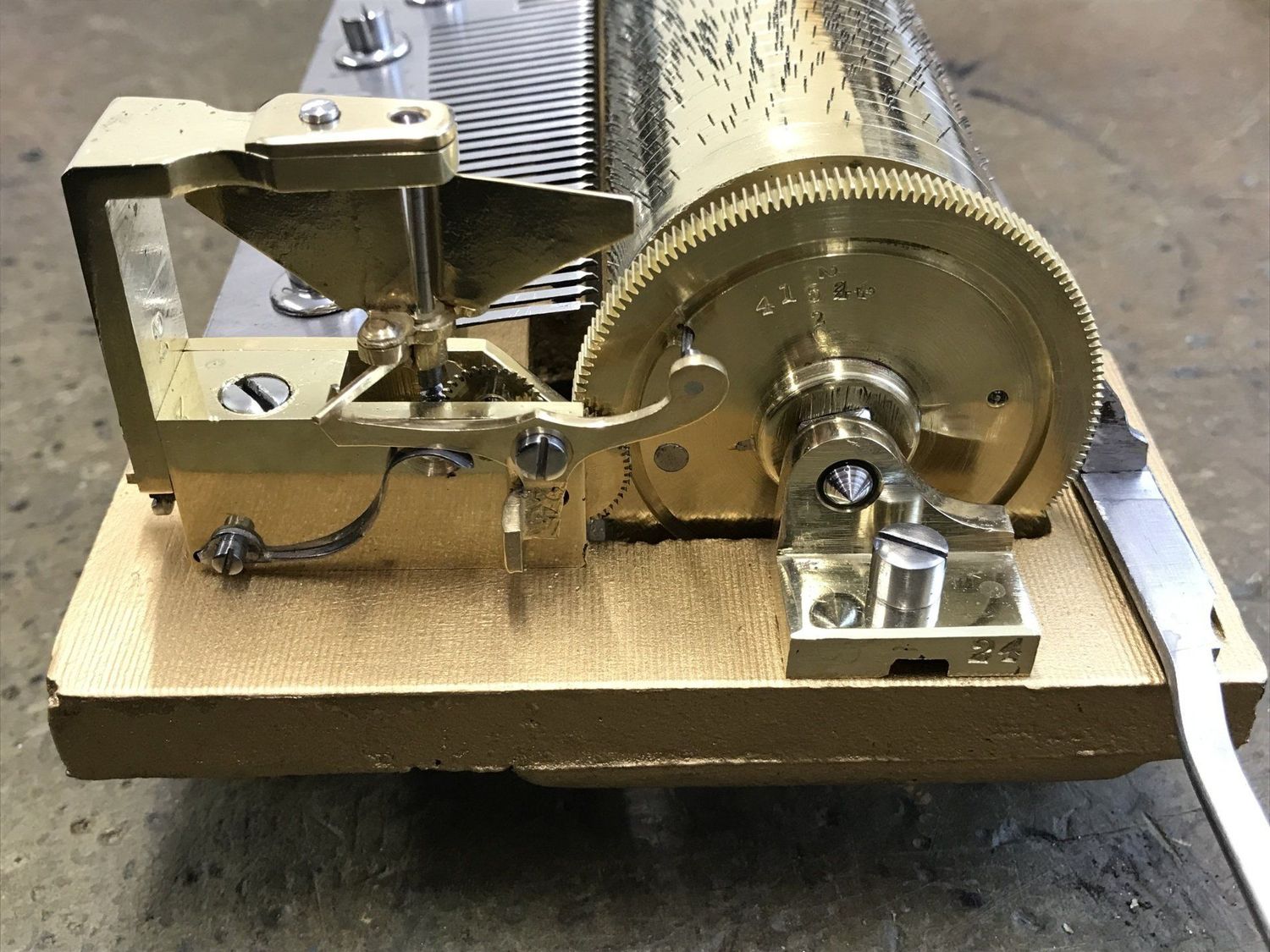
Before you open a music box that will not play, it helps to know that what looks like a broken spring is usually just old, gummy lubricant. It could also be a stuck governor forcing the movement to a halt. The mechanism in a music box called the movement brings together a mainspring, a pinned cylinder or disc, a tuned steel comb, a governor, and a bedplate, all working in sequence; understanding this term helps you search for exactly the right repair guide when something goes wrong. When you wind the key, the mainspring stores energy. It releases that energy through a train of gears. This turns the cylinder so its tiny pins pluck the comb teeth. That plucking is the heart of the inner workings of a music box. Each tooth vibrates at a fixed pitch, and the pattern of pins becomes a melody. The governor in a music box acts as a speed regulator. It uses air resistance to keep the cylinder spinning at a steady tempo instead of rushing through the tune. If the speed regulator is stuck, the music either stops or races uncontrollably. The comb itself is a precision part, and knowing the making of a music box comb reveals why each tooth must be filed and tuned with such care, a lesson that can prevent you from ruining a rare comb during a DIY restoration. A music box comb is a metal comb with specially tuned teeth of different lengths. Longer teeth produce lower notes and shorter teeth produce higher notes. Understanding these music box mechanism principles means you will know to clean and free the air brake before ever forcing the mainspring. Forcing it can shatter the comb beyond repair.
Basic troubleshooting and common fixes
When you are facing a non-working music box, start by checking the simplest physical triggers before assuming anything has failed. Make sure the on-off lever is pushed to the play position and confirm the lid is open on any design that stops the music when closed. Give the key a few gentle turns in case the spring simply ran down completely. If the assembly still refuses to budge, the culprit is rarely a broken mainspring; far more often, decades-old lubricant has hardened into a sticky paste that glues the geartrain and the speed-regulating fan in place.
To fix a music box that runs slow, that same gummy residue is usually the enemy, creating enough friction in the pivots and the air-brake blades to drag the tempo down to a crawl. A specialist clean-and-oil of those tiny bearing points almost always restores the original bright pace. When you need to fix a music box that got wound to tight, you can carefully turn the key in the opposite direction, the same way it rotates while playing, to bleed off the excess tension without forcing anything. To unwind an overwound music box, help the spring unwind by turning the key in the opposite direction; if necessary, repeat this two or three times until normal functioning returns and the drivetrain breathes freely again. Once you are ready to fix wind up music box issues for good, adopt a simple habit: wind the spring once carefully, allow it to wind down, and do not fully wind the box and close the lid right away, which keeps the old lubricant from seizing under pressure.
Repairing specific music box types
When a cuckoo clock falls silent after the bird finishes its call, you can often fix a music box on a cuckoo clock without touching the movement itself by opening the back lid and looking for the thin black wire that holds the music-box propeller. If the tune refuses to start, have one person lift the clock off the wall while another bends that wire slightly upward, stopping when the melody reliably begins after the cuckoo stops. If the music chimes before or during the call instead, the wire was bent too far up and needs a gentle downward adjustment before you hang the clock back in place.
To fix a snow globe music box or fix a music box in a stuffed animal, the movement is often buried inside the object, and the hardened lubricant that gums up larger mechanisms affects these tiny modules just as stubbornly.
When you need to repair thorens music box mechanisms, contact the Thorens distribution partner in your country with your device type, serial number, and a description of the failure; for vintage Thorens turntables, the official service partner is Arno Schreder. Attempting to force a stuck speed regulator or a seized mainspring yourself risks damage that far exceeds the cost of professional care, and if you suspect the mainspring itself has failed, be cautious about attempting to fix music box spring tension yourself, as a spring under load stores dangerous energy and the speed regulator or geartrain is almost certainly the real blockage.
Professional repair, maintenance and valuation
When a movement stays silent despite a gentle key turn, the instinct is to search for where to get my music box fixed. The answer depends almost entirely on the maker. For a modern Reuge cylinder movement, the official path runs through an authorized service center or retailer, or the Manufacture Reuge service after-sales in Sainte-Croix, Switzerland. You start by emailing photos of the piece so they can confirm key availability, then request the return form to include with your package before you ship anything. Before you pack it up, though, try the simplest release first by turning the key backward in the playing direction a few times to bleed off tension. What feels like a seized spring is almost always a speed regulator frozen in place by hardened oil. That same sticky residue is why learning to lubricate music box mechanism surfaces as a frequent question, though for modern Sankyo or Reuge cylinder boxes in normal household use, owner lubrication is simply not needed and the manufacturer handles any deep cleaning. If you are determined to repair music box movements yourself, start with the governor and geartrain pivots rather than the mainspring barrel, because forcing a stuck regulator can shatter the comb. When you need to determine value music box, no single manufacturer formula exists, and condition of the comb, clarity of the tone, and whether the dampers are intact matter more than the age alone. For Thorens vintage music box pricing, the disc-playing mechanisms prized by collectors vary so widely by model and rarity that a professional appraisal is a reliable next step. The same holds true when you are trying to pin down the value of a Reuge music box, especially for an automaton or a limited-run inlay piece where original documentation and an unopened engine can shift the range considerably.
- Thorens vintage music box pricing — How Much Is A Thorens Vintage Music Box Worth
- lubricate music box mechanism — How To Lubricate Music Box Mechanism
- determine value music box — How To Determine Value Music Box
- get my music box fixed — Where Can I Get My Music Box Fixed
- repair music box — How To Repair Music Box
Dating and operating antique music boxes
Most antique music boxes carry no stamped date, but you can still tell when music box made by checking the movement for a maker’s mark, which is essential for dating your find. You also need to examine whether it uses a pinned drum or a disc-driven engine. Pre-1820 combs often had individual teeth screwed to a backplate. Hollow or waxless barrels point to very early construction. Later case finishes and comb widths can narrow the decade.
When you operate a swiss music box circa 1875 with a cylinder movement, the typical start sequence is to pull the lever upwards on the left-hand side twice, a skill you need to hear that era’s delicate melodies. Then return it to its resting position. The real precaution is never forcing that lever if nothing moves. A stuck speed regulator rather than a fully wound spring is almost always the true culprit. For disc models from the same era, you secure the disc with the two brass locking clips. Push the lower right lever up to start play. Leave it up if you want the melody to repeat.
If you need to work moodmedia music box hardware, the operating steps are not publicly documented by the manufacturer, so you must rely on general mechanical knowledge to get it playing. Any attempt should start with a visual check for the same air-brake and geartrain stiffness that plagues vintage movements. To change the song on a music box that uses a traditional pinned cylinder, the tune is fixed by the pin arrangement, meaning you cannot alter it without re-pinning if you want new music. It cannot be altered without re-pinning. A disc machine changes songs simply by swapping in another disc from the maker’s catalog. Digital and programmable boxes shift tunes by loading a new audio file via USB or memory card. They can also switch songs through a companion smartphone app.
- operate a swiss music box circa 1875 — How To Operate A Swiss Music Box Circa 1875
- change the song on a music box — How To Change The Song On A Music Box
- tell when music box made — How To Tell When Music Box Made
- work moodmedia music box — How To Work Moodmedia Music Box
Converting and composing music box tunes
If you want to convert songs to music box, one path on a computer is to import a MIDI file into a browser-based editor like Music Box Maniacs and then export the result as an MP3 or a printable paper strip. You can also make songs into music box version arrangements on an iPhone using apps such as Music Box Composer to build the melody on a grid, preview it, and share the finished piece. When you set out to compose a music box song on Android, MusicBox Maker lets you enter notes manually one by one and save the composition as an MP3 file by choosing Create MP3 file. Regardless of the tool, the physical limits of a real mechanism still apply, and a custom tune that exceeds a note index of 18 cannot be manufactured. You must place the main melody first, check the remaining index, and only then add chord notes within that strict ceiling.
Diy music box mechanisms and paper strip projects
If you want to make music box mechanism parts from scratch, you will need to fabricate a pinned cylinder or a punched disc, but the practical home project almost always starts with a pre-made 15- or 30-note movement that you can mount into a wooden resonator box of your own design. That same assembly is what makes a paper music box work as the strip feeds through a guide and each precisely placed hole catches a tiny gear tooth that plucks the corresponding tuned tine on the comb. The strip must be printed at 100% scale with no "fit to page" scaling, otherwise the hole spacing drifts and the song jams mid-play. For thin printer paper, back it with 65 lb cardstock or run it through a 3 mil laminating pouch before you punch the notes, then join the cut strips with tape applied to alternating sides so the finished song folds accordion-style. If you would rather skip the physical apparatus entirely, you can build a digital music box by programming a microcontroller with a piezo buzzer or loading a MIDI-derived arrangement into music software to play the tune. Still, the charm of hearing a real steel comb resonate inside a wooden case is hard to replicate.
Creative music box and instrument builds
When you want to make a music box with ballerina, the assembly starts the same way as any quality kit, and following that guide ensures the dancer spins gracefully as the tune plays. Fix the bracket and bearer to the base with screws, seat the drum shaft into the backstop, and align the comb so the first and last pins match the drum body ends before tightening everything down. That careful alignment matters because a misaligned comb under tension can chip a tooth, though a stuck speed regulator from old grease is far more likely to halt the drive train than a fully wound spring.
If you would rather build something percussive, you can make an acoustic stompbox by gluing a piezo pickup under the lid of an empty cigar box, installing a mono jack and potentiometer in the side, soldering the connections, and filling the box with cotton wool to control the resonance. For a melodic alternative, a flat top box guitar follows a similar cigar-box lutherie tradition, shifting the focus from foot-tapped rhythm to fretted lead lines through body geometry and bracing.
Beyond these projects, a whole family of custom music box builds lets you tailor the drive train, case, and playback style to your taste. Some add a rotating platform, while others let you punch your own paper strips. The right choice depends on whether you prize visual motion, a changeable tune library, or the warm tone of a pinned barrel striking a steel comb. For a truly unique gift, you can also make your own music box from a pre-made mechanical module, which is the simplest path to a personalized gift, and the dedicated article shows exactly how to select and mount the module for the best sound.
Understanding the traditional pinned barrel engine is the first step toward building or repairing one. The spring barrel delivers power through a series of brass gears that turn a rotating drum studded with tiny steel pins. A flywheel air brake spins against the resistance of the air to stop the spring from unwinding in one explosive burst. As the drum revolves, its pins pluck the tuned teeth of a steel comb, and the entire assembly is mounted on a brass bedplate screwed into a wooden case or a decorative resin housing.
Dirt and dried oil are the most common culprits behind a sluggish or silent antique. A pinned barrel that refuses to turn usually points to a gummed-up air brake, and the delicate pivot points in the flywheel assembly need to be flushed with a solvent like naphtha. Never oil these pivots, as they rely on dry friction against their bearing plates to function. A tiny drop of clock oil on the mainspring arbor and the gear train pivots is all that is needed elsewhere. The comb itself rarely goes out of tune unless a tooth has been bent or snapped, in which case it can be carefully filed back and retuned by removing material from the underside near the root.
Adding motion transforms a static module into a kinetic sculpture. You can make rotating music box platforms by tapping into the drive train, friction-fitting a small plastic pulley to the winding key shaft, and connecting it with a rubber belt to a turntable spindle mounted on the case lid. As the tune plays, a figurine spins, but the torque is very low, so the rotating platform must be perfectly balanced and spin freely on a polished metal axle, as any friction will stall the entire gear train.
To make cylinder music box mechanisms from scratch, you need a lathe and a great deal of patience, but the guide for that project breaks down the daunting process into manageable stages. The pinned barrel is a hollow brass tube into which you drill thousands of tiny holes in a precise grid, then cut, insert, and shear steel wire pins to the correct height. The comb blank is cut from a sheet of hardened spring steel with each tooth progressively longer than the last, and tuning involves clamping the comb to a jig and grinding the underside of each tooth while checking the pitch against a chromatic tuner. The gear train must be precisely calculated so the barrel completes one revolution in the exact time of the melody.
A more accessible DIY approach uses paper strips instead of a pinned barrel. A hand crank pulls the paper through while driving a small bellows or directly plucking a comb, so the paper strip acts as a removable program you can punch with new songs using a special hole punch. The spacing of the holes determines the rhythm, and the position across the width of the strip determines the pitch.
Designing a paper strip tune requires thinking on a grid where the strip is divided into measures and beats. A hole punched in the leftmost channel plays the lowest note, a hole in the rightmost channel plays the highest, and chords are made by punching multiple holes in the same vertical column. The tempo is controlled entirely by how fast you turn the crank, so a steady hand produces a waltz while an unsteady hand produces a chaotic, lurching rhythm. The charm of these paper strip devices lies in their forgiving, hands-on musicality.
Combining a hand-cranked paper strip module with a guitar body creates a unique hybrid instrument. The module is mounted inside a shallow wooden box with a soundhole, the crank sticks out of the side, and the paper strip feeds through a slot in the top. You play the crank with one hand and fret notes on a single guitar string with the other, which is amplified by a magnetic pickup wired to an output jack. The acoustic sound of the paper strip mechanism blends with the electric signal of the string to create a layered, drone-based performance instrument.
The case itself is a critical part of the instrument's voice. A solid hardwood box reflects sound efficiently, while a softwood box absorbs high frequencies and warms the tone. The thickness of the lid acts as a passive radiator: a thin, flexible lid vibrates more freely and produces a louder, boomier sound, whereas a thick, rigid lid projects a quieter but clearer tone. You can tune the resonance of the case by adding internal baffles or by adjusting the size of the
- make a custom music box — How To Make A Custom Music Box
- make your own music box — How To Make Your Own Music Box
- make rotating music box — How To Make Rotating Music Box
- make cylinder music box — How To Make Cylinder Music Box
- make paper strip music box — How To Make Paper Strip Music Box
- make a music box with ballerina — How To Make A Music Box With Ballerina
- make an acoustic stompbox — How To Make An Acoustic Stompbox